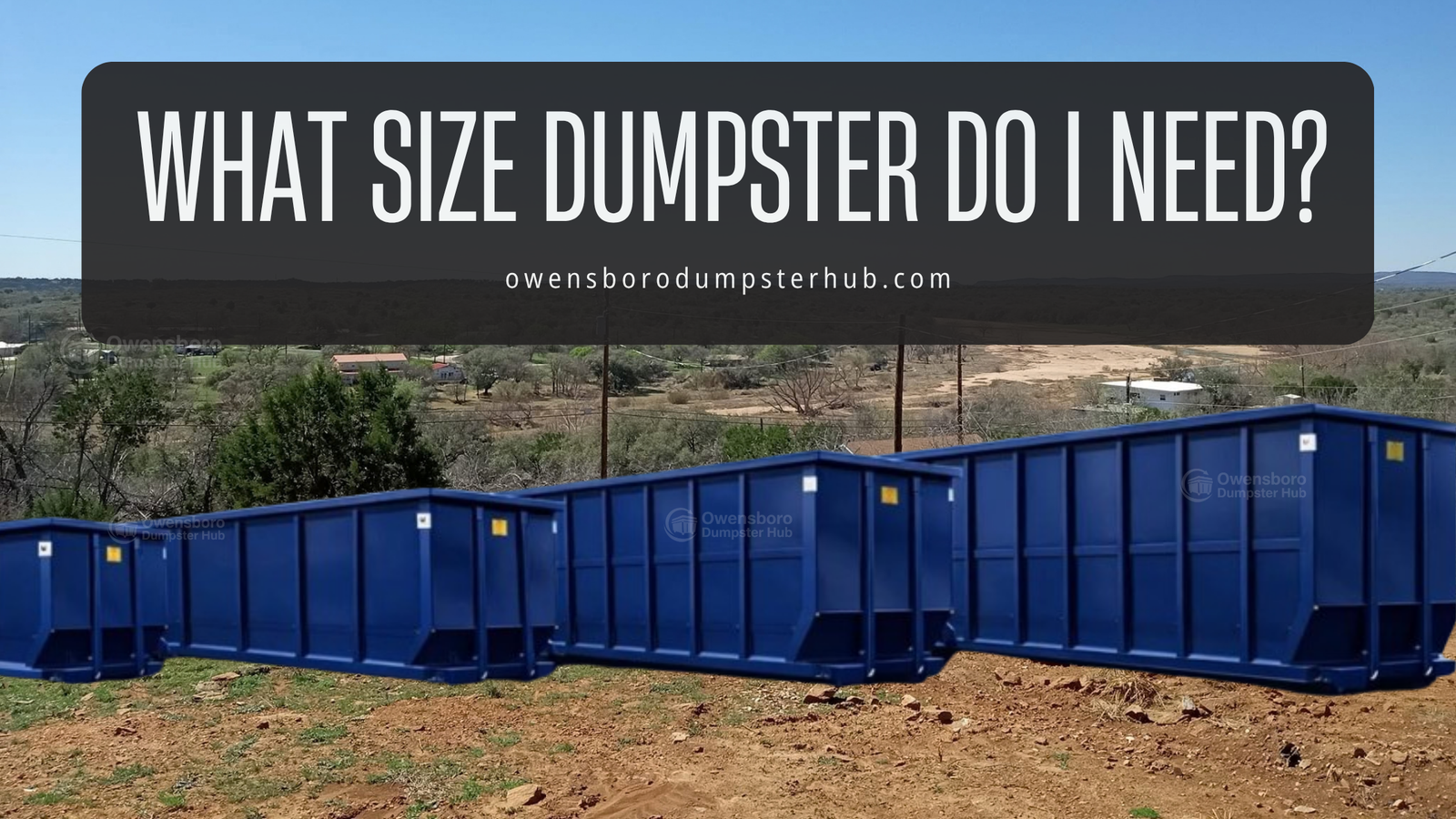
What Size Dumpster Do I Need? Quick Picks by Project
Choosing the right dumpster is easier when you look at the project as a whole instead of guessing from the size alone. The amount of debris, type of material, available placement space, and project timeline all matter.
This dumpster size guide explains the common size options and gives you a practical way to narrow down your choice. It is meant to help homeowners and contractors ask the right questions before booking.
Want to see every container side by side? You can also compare all dumpster sizes with dimensions and weight limits before you decide.
Table of Contents
Quick Answer: What Size Dumpster Do I Need?
The answer depends mainly on how much debris your project will create and what that debris is made of.
Owensboro Dumpster Hub has 10-, 15-, 20-, 30-, and 40-yard options, plus a “Not Sure” choice for customers who need help deciding. Exact availability, dimensions, and weight limits can vary by project, so confirm the details before scheduling delivery.
The key takeaway from this dumpster size guide is simple: choose based on both volume and material, not just the name of the project.
How Dumpster Sizes Work
Dumpster sizes are generally described in cubic yards. The number refers to the container’s volume, not its length.
A 20-yard dumpster, for example, refers to roughly 20 cubic yards of available volume. However, physical dimensions can vary between providers, so two containers with the same advertised size may not have identical measurements.
That is why this dumpster size guide should be used as a starting point rather than a substitute for checking the specific container you are considering.
Weight is another factor. A container can have physical space remaining while the material inside is already heavy. Dense materials such as concrete, brick, and dirt need different planning from lightweight household debris.
Dumpster Size Chart: Which Option Fits Your Project?
The table below gives you a simple overview of the available size categories. These project examples are general guidance, not guarantees that a particular project will fit a specific container.
| Dumpster size | General fit | Examples |
|---|---|---|
| 10 yard | Smaller volume | Small cleanouts and limited project debris |
| 15 yard | Small to medium volume | Garage cleanouts and moderate renovations |
| 20 yard | Medium volume | Larger cleanouts, remodeling, roofing or flooring debris |
| 30 yard | Large volume | Major renovations and larger construction cleanup |
| 40 yard | Very large volume | High-volume construction and major cleanup projects |
Use this dumpster size guide to narrow your options, then consider the actual material, placement area, and project scope before making a final decision.
10-Yard Dumpsters: When a Smaller Container Makes Sense
This dumpster size guide starts with the smaller options because project volume is often the first decision to make.
A 10-yard option can make sense when the amount of debris is limited.
A 10-yard option can work for a limited cleanup or single project area. It avoids taking more space than necessary, but dense debris can become heavy quickly.
If concrete, dirt, brick, or another dense material is involved, this dumpster size guide is only a starting point; ask the provider about the appropriate option and any weight restrictions.
15-Yard Dumpsters: A Middle-Ground Option
A 15-yard dumpster can be useful when a 10-yard container seems too small but a larger option feels unnecessary.
It may work for moderate cleanouts or smaller renovations. This dumpster size guide is most useful when you compare the amount and type of debris rather than price or volume alone.
20-Yard Dumpsters: For Medium Projects
This dumpster size guide treats the 20-yard option as a useful comparison point for medium-volume projects.
A 20-yard option provides more room for larger cleanouts, remodeling, flooring removal, or similar projects. If you are asking, “what size dumpster do I need for my project?”, estimate debris volume rather than judging only by room size.
A kitchen renovation, for example, can produce a very different amount of waste from a simple room cleanout, even when both involve one room.
30-Yard Dumpsters: For Larger Debris Volumes
A 30-yard option is better suited to projects where debris volume is likely to be substantial.
This can include larger renovations, construction cleanup, or work involving several areas of a property.
This dumpster size guide is especially useful here because project scope can vary. Compare expected volume and material type before selecting the container.
40-Yard Dumpsters: When the Project Is Large
A 40-yard option provides the greatest volume among the sizes listed for this project. This dumpster size guide places it at the high-volume end of the range.
It may be appropriate for high-volume construction or major cleanup work. However, more space does not mean unlimited weight capacity.
If your project involves a large amount of dense debris, use this dumpster size guide carefully and do not select a size based only on volume. Confirm whether the container is appropriate for the material and ask about applicable restrictions.
How to Choose a Dumpster Size Without Guessing
A practical dumpster size guide should help you make a decision, not make the process more confusing. Start with these five questions.
1. What type of project are you doing?
Start with the work itself.
A garage cleanout, bathroom renovation, roofing project, and construction job can produce very different waste streams. Identifying the project gives you a useful starting point.
2. How much debris will you generate?
Try to visualize the final debris pile rather than the work itself.
If you are removing furniture, flooring, cabinets, drywall, or other bulky materials, think about how much space those materials will occupy once removed.
3. Is the debris heavy?
This matters more than many first-time renters realize.
A container filled with lightweight household items is very different from one filled with dense construction material. If heavy debris is involved, ask the provider about the appropriate size and weight requirements.
4. Where will the dumpster go?
The placement area can affect your choice.
Measure the space you plan to use and consider the delivery path. Exact container dimensions vary, so confirm the dimensions of the specific dumpster before booking if space is limited.
5. Could the project grow?
Projects sometimes change after work begins.
A small renovation can uncover additional work. A cleanout can become larger once cabinets, flooring, or stored items are removed.
If you are between two sizes, explain the project to the provider instead of making the decision from the size name alone.
Common Mistakes When Choosing Dumpster Sizes
Keep this dumpster size guide nearby when comparing options, but remember that your actual project details should drive the final choice.
Even a good dumpster size guide cannot replace project-specific planning. Watch for these common mistakes.
Choosing Based Only on the Project Name
A “kitchen remodel” can vary greatly in scope.
Ignoring Heavy Materials
Dense materials can add significant weight without filling the container.
Forgetting About Physical Space
Check the placement area and delivery path before choosing.
Assuming All Dumpsters Have the Same Dimensions
A 20-yard dumpster from one provider may not have exactly the same dimensions as another provider’s 20-yard container.
Waiting Until Delivery Day to Ask Questions
If you are unsure about size, materials, access, or placement, ask before delivery. A quick conversation can prevent an avoidable problem.
What Size Dumpster Do I Need for Common Projects?
There is no universal answer, but these examples can help you narrow down the dumpster sizes worth considering:
- Small cleanout: Start with the smaller options if debris volume is limited.
- Garage cleanout: A 10- or 15-yard option may be a starting point, depending on how full the space is.
- Room renovation: A 10-, 15-, or 20-yard option may be relevant depending on materials and scope.
- Larger home cleanout: A 20- or 30-yard option may be worth considering.
- Major renovation: A 30- or 40-yard option may be more appropriate when debris volume is high.
- Construction project: Larger options may make sense, but material type and weight should be discussed first.
- Heavy debris: Do not choose by volume alone. Confirm whether the provider accepts the material and what restrictions apply.
These are starting points, not fixed rules. The actual answer depends on the amount and type of debris, so confirm the details before booking.
How to Choose a Dumpster Size With Confidence
The best choice is the container that matches your project’s debris without creating unnecessary space or capacity problems.
Use this dumpster size guide to start with the project, estimate the volume, identify heavy materials, check your placement area, and then confirm the specific container details with the provider.
Once you have a rough idea, compare all dumpster sizes in Owensboro, KY to see capacity and dimensions for 10-, 20-, 30- and 40-yard containers.
If you are still asking, “what size dumpster do I need?”, you do not have to figure it out from a chart alone.
For an Owensboro project, contact Owensboro Dumpster Hub through the Contact Us page and share your project details. The form includes a Not Sure option if you need help narrowing down the available sizes.
Ready to choose your size? Contact Owensboro Dumpster Hub to get started.