Dumpster Rental in Owensboro, KY: A Practical Guide for Homeowners & Contractors
Planning a home cleanout, renovation, roofing project, or construction job can create more debris than expected. Without a clear plan for handling it, waste can quickly take over your driveway, garage, yard, or job site.
That is where a dumpster can make the cleanup side of a project more manageable.
Whether you are a homeowner preparing for a major cleanout or a contractor managing debris from a job site, a little planning can make the rental process easier. These dumpster rental tips can help you think through the important details before the container arrives.
Table of Contents
What Is a Roll-Off Dumpster?
A roll-off dumpster is a large waste container designed to be delivered to your property or project site and picked up when the job is finished. It is commonly used for projects that generate more debris than can reasonably be handled through regular household trash service or repeated trips to a disposal facility.
Roll-off dumpsters can be useful for many types of projects, including:
- Home cleanouts
- Moving and downsizing
- Remodeling
- Roofing projects
- Property cleanup
- Construction and renovation work
- Large-scale debris removal
One of the most useful dumpster rental tips is to think about the type and amount of debris your project will generate before choosing a container.
When Should You Rent a Dumpster?
A dumpster can be useful when a project will generate a steady or substantial amount of material over several days.
Home Cleanouts and Moving Projects
Cleaning out a garage, basement, attic, storage area, or an entire home can produce a mixture of unwanted household items and general debris.
A dumpster can give you one central place to put project-related waste instead of creating multiple piles around the property.
If you are moving or downsizing, planning the cleanup before you begin can also help you decide what needs to be removed and how much space you may need.
Remodeling, Roofing, and Construction Projects
Renovation work can generate materials quickly. Flooring, cabinets, drywall, roofing materials, fixtures, and other debris can accumulate as the project progresses.
For contractors, construction projects may require even more planning because debris generation can depend on the project stage, crew size, and type of work being performed.
One of the practical dumpster rental tips here is to consider when the debris will be generated, not just how much you expect to have at the end.
How to Choose the Right Dumpster Size
Choosing a container starts with understanding your project.
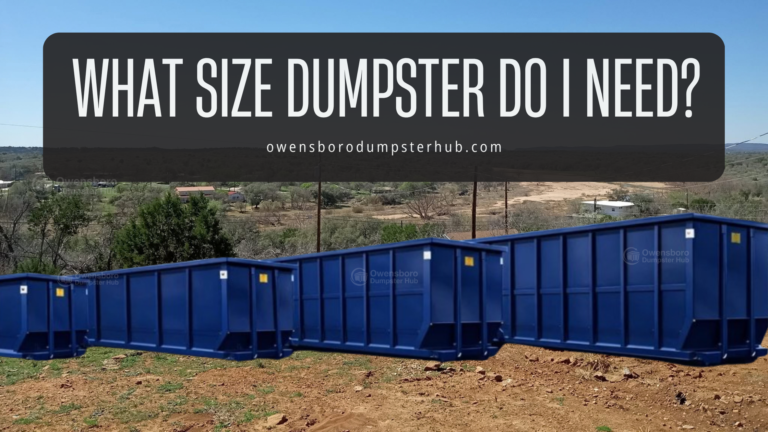
Available sizes can vary by provider, and the right option depends on the type and amount of material you need to dispose of. Owensboro Dumpster Hub offers size options ranging from 10 to 40 yards, along with a “Not Sure” option for customers who need help determining what fits their project.
Dumpster Size Options for Different Projects
A smaller container may make sense for a limited cleanup, while larger renovation or construction projects may require more space.
However, you should not select a size based only on the number of rooms involved. The actual volume and type of debris matter.
What to Consider When Choosing a Size
Before requesting a dumpster, consider:
- What type of project are you completing?
- What materials will be removed?
- How much debris do you expect?
- Will debris be generated all at once or over several days?
- Do you expect bulky materials?
- Could the project scope change?
If you are uncertain, provide the dumpster provider with as much information as possible about the project. Asking before delivery is one of the simplest dumpster rental tips for avoiding an unsuitable container.
Where Should a Dumpster Be Placed?
Placement should be considered before the dumpster arrives.
A driveway or another suitable area on private property may be convenient, but the location needs to provide enough room for delivery and pickup.
Driveway and Private-Property Placement
A driveway is often a practical location because it provides access while keeping the container on private property.
Before delivery, check that the area is clear of vehicles, equipment, loose materials, and other obstacles.
You should also consider whether the surface and surrounding area can accommodate the container safely.
Access, Clearance, and Delivery Considerations
The delivery vehicle needs a clear path to the placement area.
Look for potential obstacles such as:
- Low branches
- Utility lines
- Narrow entrances
- Parked vehicles
- Gates
- Construction equipment
These details are easy to overlook, which is why checking access ahead of time is one of the most useful dumpster rental tips for homeowners and contractors.
Public Streets and Right-of-Way Considerations
Placing a dumpster on a public street or other right-of-way can involve different considerations than placing one on private property.
Local requirements may depend on the location and circumstances. If your planned placement involves a public area, check the applicable local requirements before delivery rather than assuming a permit is or is not required.
What Can You Put in a Dumpster?
The materials accepted in a dumpster depend on the provider and the type of waste involved.
Common project debris may include household cleanout materials, renovation debris, construction materials, and other general waste.
However, not every material should automatically go into a dumpster.
Common Household and Project Debris
Depending on the provider’s policies, dumpsters may be suitable for materials generated from:
- Home cleanouts
- Remodeling
- Construction
- Roofing
- Property cleanup
- Moving projects
Always consider the source and type of material before loading it.
Materials to Check Before Loading
Certain materials may require special handling or disposal methods.
If you are unsure about a particular item, ask the dumpster provider before putting it into the container. This is especially important for materials that may be hazardous, regulated, unusually heavy, or subject to special disposal requirements.
Checking first is another simple dumpster rental tip that can prevent problems later.
What About Heavy Debris?
Heavy materials require additional planning because the weight of the debris can matter even when there appears to be enough physical space in the container.
Concrete, Brick, Dirt, and Similar Materials
Concrete, brick, dirt, and similar dense materials can become extremely heavy.
Do not assume that a large container automatically means it is appropriate for heavy debris. Ask the provider about the suitability of the container for the specific material and any applicable weight restrictions.
Why Weight Matters When Planning a Dumpster
Two projects can produce similar-looking piles of debris but have very different weights.
For example, a pile of lightweight household materials is not the same as an equally sized pile of concrete or dirt.
One of the most important dumpster rental tips for demolition and construction projects is to think about both volume and weight.
How to Prepare for Dumpster Delivery
A few minutes of preparation can make delivery much easier.
Clearing the Placement Area
Remove vehicles, tools, equipment, loose materials, and other objects from the planned location.
Make sure the area is accessible when the delivery vehicle arrives.
Preparing the Delivery Path
Look at the complete route from the street to the intended placement area.
Check for narrow areas, gates, parked vehicles, low branches, overhead obstacles, and anything else that could interfere with delivery.
Keeping the Area Safe During Delivery
Keep children, pets, and unnecessary vehicles away from the delivery area while the dumpster is being positioned.
If your project is taking place on an active construction site, make sure workers know where the container will be placed.
These preparation steps are simple dumpster rental tips, but they can make the delivery process much smoother.
How Contractors Can Plan Dumpster Rental
Contractors have additional factors to consider because dumpster use is often connected directly to the project schedule.
Estimating Debris and Project Needs
Think about the materials being removed, the pace of the work, and how much debris may accumulate during each phase.
For larger projects, it may also help to identify when the greatest amount of debris will be generated.
Coordinating Placement, Delivery, and Pickup
The dumpster should be positioned where workers can load it efficiently without interfering with other parts of the job.
Contractors should also think about access for the delivery and pickup vehicles and communicate any site-specific concerns with the provider.
For contractors, these dumpster rental tips can help connect waste planning with the overall project schedule.
Dumpster Rental vs. Repeated Dump Runs
For a small cleanup, loading debris into a personal vehicle or trailer and making disposal trips may be practical.
For larger projects, repeated trips can take workers away from the actual job and create another task to manage.
A dumpster provides a centralized place for project debris while the work is underway.
The right approach depends on the project’s size, material, schedule, equipment, and disposal requirements.
Dumpster Rental Planning Checklist
Before arranging a dumpster, review the following:
Project and Debris Checklist
- Identify the type of project.
- Estimate the amount of debris.
- Identify bulky or heavy materials.
- Check whether any materials require special disposal.
- Consider how quickly debris will accumulate.
- Choose a suitable container size or ask for guidance.
Placement and Delivery Checklist
- Select the placement area.
- Clear vehicles and obstacles.
- Check the delivery path.
- Look for overhead clearance issues.
- Consider driveway and surface conditions.
- Check local requirements if placement involves a public right-of-way.
- Confirm delivery and pickup details with the provider.
These dumpster rental tips can help you approach the rental as part of the project plan rather than as an afterthought.
Planning Your Dumpster Rental in Owensboro
Whether you are cleaning out a home, renovating a property, working on a roofing project, or managing a construction job, the best place to start is with a clear understanding of your project’s debris.
For homeowners, you can learn more about residential dumpster rental and how it may fit into a home project.
For contractors and businesses, the commercial dumpster rental page provides information relevant to larger work and job-site needs.
You can also review the dumpster rental process to understand the general steps from requesting a quote through delivery, loading, and pickup.
When you are ready to discuss your project, contact Owensboro Dumpster Hub to get started.
Get Your Dumpster Rental Quote in Owensboro, KY; Contact Owensboro Dumpster Hub